
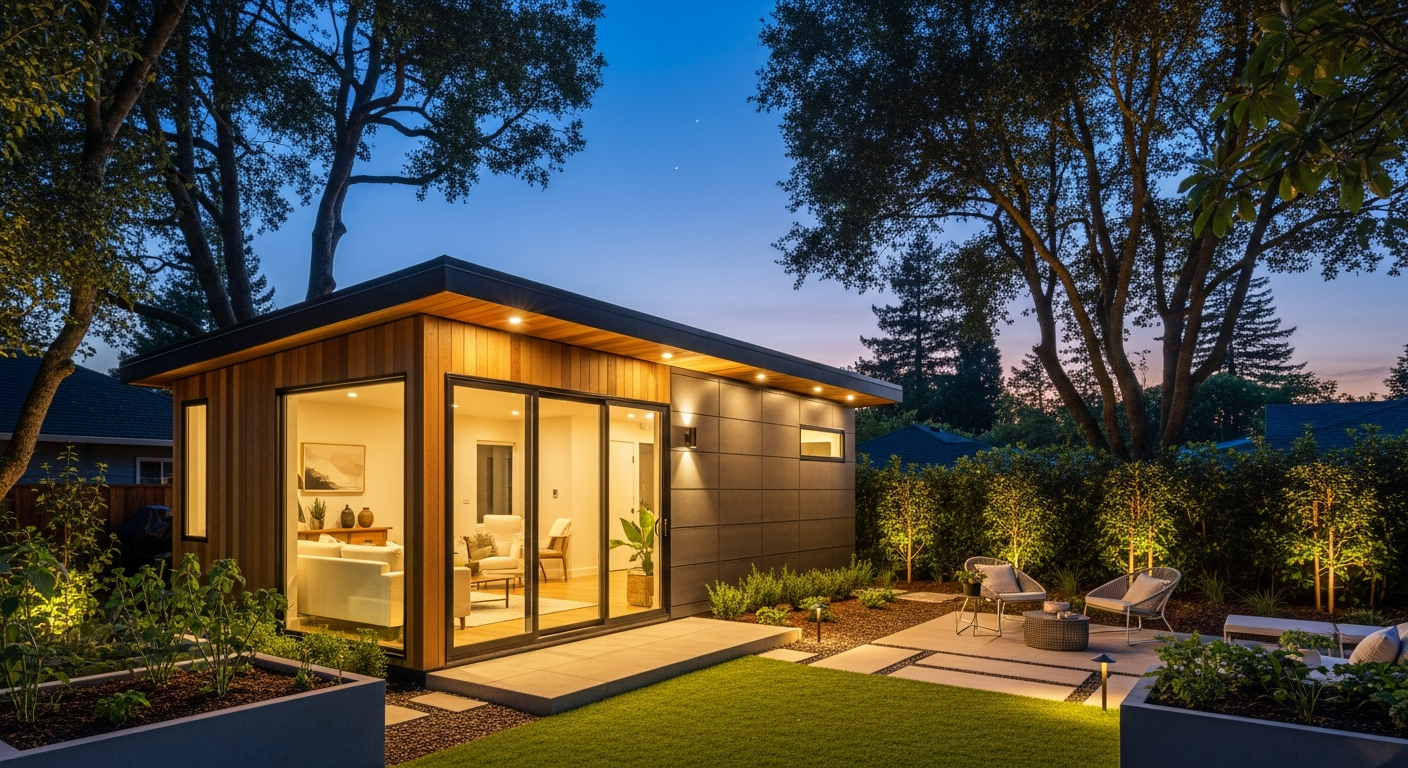
ADU Financing Strategy
Modular ADU Financing
Modular ADUs can offer faster, more predictable construction. This guide explains how home equity, future-value, and digital HELOC options can fund a modular build while keeping your first mortgage in place.
Modular vs traditional construction
Modular ADUs are built in sections inside a factory while site prep, foundation, and utility work happen at the property at the same time. Because the building environment is controlled, materials are protected from weather and construction can proceed in parallel rather than sequentially.
Traditional site-built ADUs follow a linear process where each phase depends on the last. Modular construction can reduce the overall timeline, though actual timing varies by builder, site, permits, and other conditions.
Financing considerations
Modular builds can involve factory deposits, production slot reservations, delivery, and installation costs that differ from traditional construction. Financing that provides funds at closing can help qualified borrowers manage these costs without relying on staged construction draws.
Equity-based options like a HELOC or Future Value HELOC can give qualified homeowners access to funds when the modular builder needs them.
Factory deposits
Modular manufacturers often require a deposit to begin production and reserve a build slot. For homeowners, having financing in place before ordering can help cover these deposits and keep the project on schedule.
Equity-based financing that provides full access to eligible funds at closing can be useful here, since it avoids the inspection-based draw schedule of some construction loans.
Construction timing
Modular timelines can be shorter than traditional builds, but they still depend on factory production schedules, site readiness, permitting, delivery logistics, and installation. No specific timeline is guaranteed.
A Digital HELOC can offer a streamlined process for qualified borrowers with sufficient current equity, helping align funding with the modular timeline.
Draws or funding structure
Some construction loans release funds in stages tied to inspections, which can complicate modular deposits and production payments. Equity-based financing often provides funds at closing instead, giving qualified homeowners flexibility to pay the builder as milestones arrive.
Home equity options
Home equity is a common way to fund modular ADUs because it leverages value already built in the property. Options include HELOCs, future-value financing, and home equity alternatives, many structured as a second lien to preserve an existing first mortgage.
Future value considerations
A completed modular ADU may add value to the property. A Future Value Renovation HELOC may consider that projected after-renovated value, which can help when current equity is limited relative to the modular project cost. Projected value does not guarantee approval or a specific credit limit.
Homeowner planning
When planning a modular ADU, consider the builder's deposit schedule, production lead time, site preparation, and permitting alongside your financing strategy. Matching the funding source to the payment milestones helps keep the project on track.
Park Place Lending can help qualified homeowners in California and Florida compare options for a modular ADU.
Frequently Asked Questions
Related ADU financing options
Ready to explore your ADU financing options?
Contact Jim Park at Park Place Lending to review the strategy that fits your equity, property, and goals.
Reviewed by Jim Park, Mortgage Loan Originator, NMLS 2012003. Updated September 2026. This page is for informational purposes only and is not a commitment to lend.